About the Astrophotography Software Division
Software development, and deep-sky imaging from Denver and the Buffalo Ridge Observatory, near Como, Colorado.
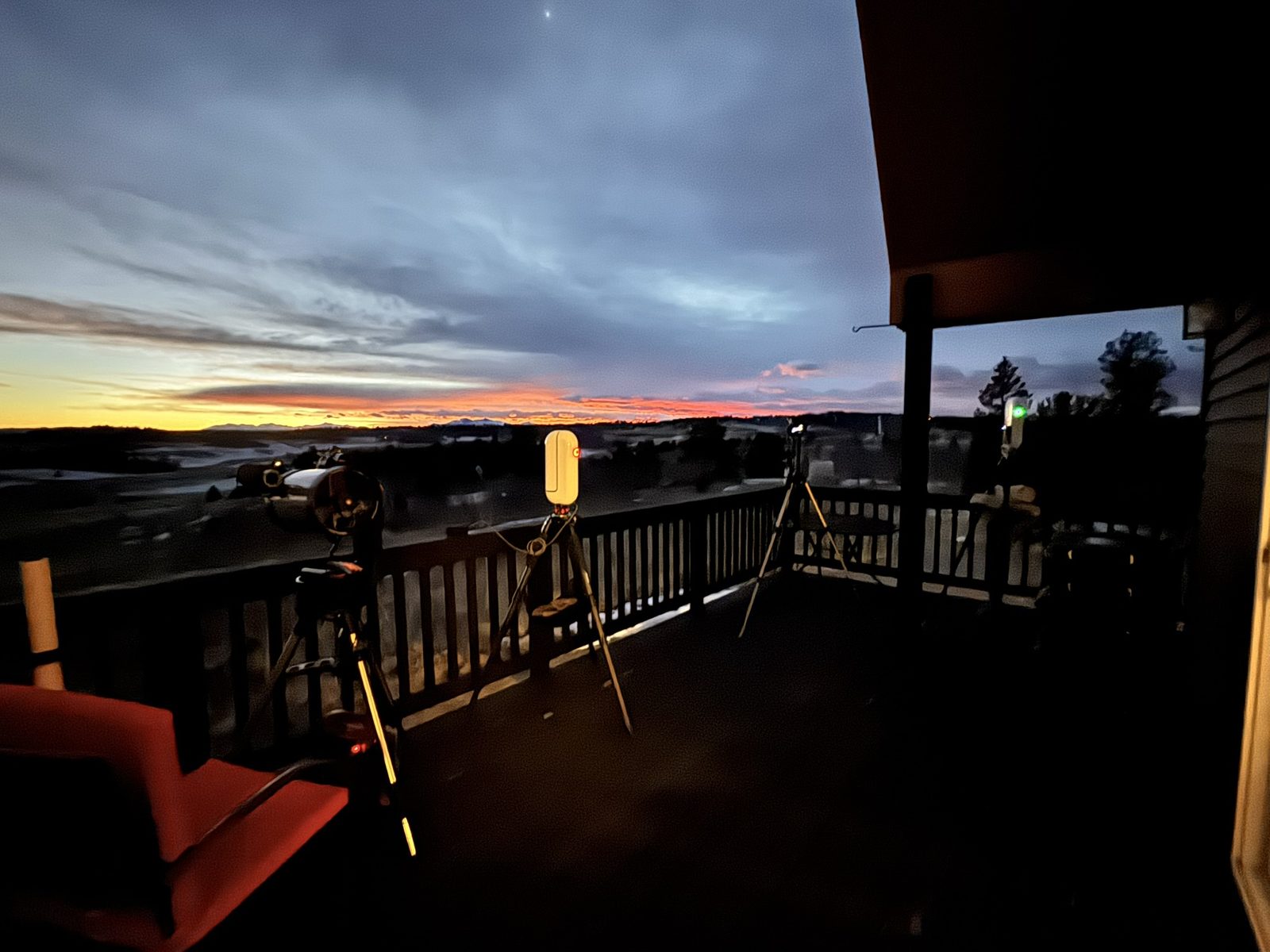
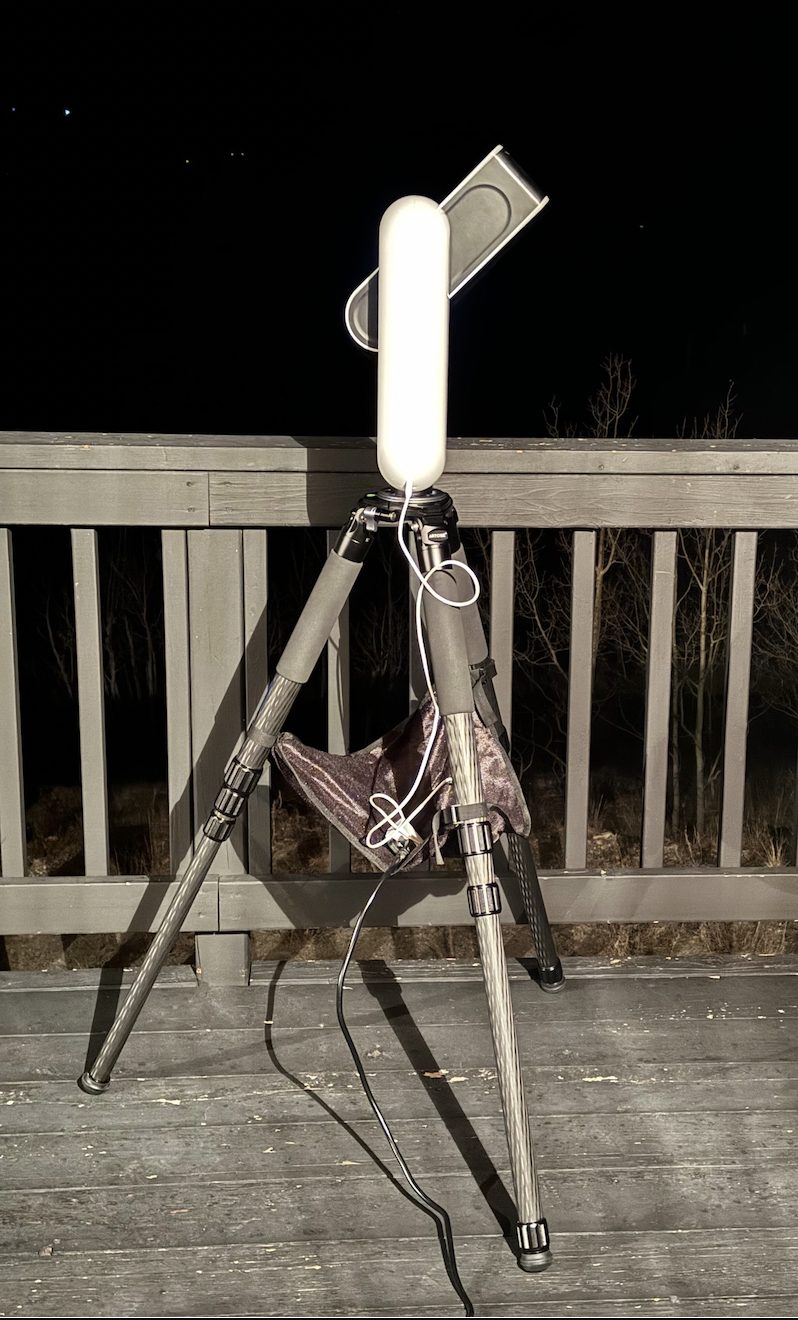
Michael's journey into astrophotography began in 2023 with a single Vespera Classic smart telescope. Today he images with a four-telescope array — two Vespera II and two Vespera Pro units — that travels with him between Denver and the dark skies near Como, Colorado, home of the Buffalo Ridge Observatory.
Since the spring of 2026, Michael has been developing the Astrophotography Automation System (APAS). Running on a dedicated Mac cluster, APAS automates the full pipeline from raw capture to a finished image. APAS is capable of being run by beginners with little or no knowledge of astronomical data processing, or by advanced users who still want to have substantial control over the finishing process. Among other things, APAS is capable of:
- Automatically connecting to telescopes' wifi and downloading raw data to computer
- Archiving all raw data on a connected network computer automatically
- Automatically keeping a mirror of all raw data on the two main processing computers
- "Divide and conquer" stacking and processing across multiple computers for large stacks that can exceed 12,000 frames
- Organizing observational files and folders so that multiple observations of a single deep-sky object can be combined
- Combining images from multiple scopes, locations, and observation sessions
- Stacking and rejection
- Gradient removal
- Blur extermination
- Image registration and scoring
- Stretching
- Preparation for final processing in Cosmos Darkroom
A single successful night of imaging with all four scopes can easily yield more than 120 GB of data, so the Mac cluster stays busy — both computationally and in the constant work of organizing the files.
APAS now comprises roughly 97,000 lines of code, most of it written in Unix zsh, with additional components in Bash and Python. APAS orchestrates a complex workflow that can automate data acquisition from smart telescopes, combining multiple observation sessions, stacking and image registration, automatic rejection, gradient removal, and stretching with target-based parameters that were developed from a custom iterative scoring process that is unique to APAS.
APAS does this orchestration by building off of other astronomical processing tools, including GraxExpert, Siril and Siril scripts and macros, along with methods developed expressly for APAS that can apply mosaic stacks and non-mosaic stacks into a single stacked image. APAS is in its development stage, with commercial release tentatively set for mid-2027.